Industry Knowledge
Double-End Socket Design: How a Straight Handle Wheel Wrench Covers Multiple Vehicle Classes in One Tool
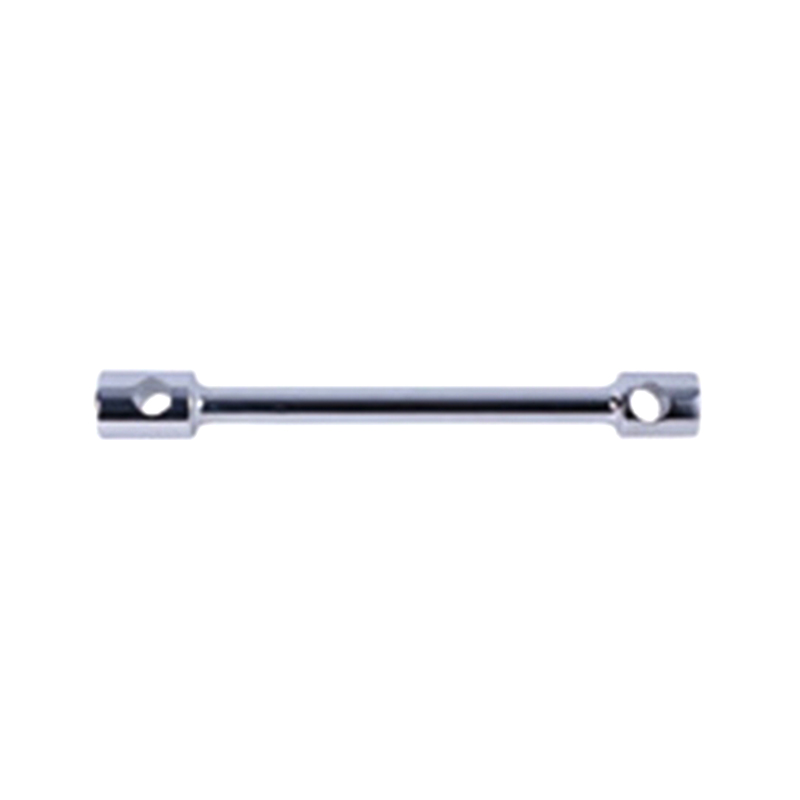
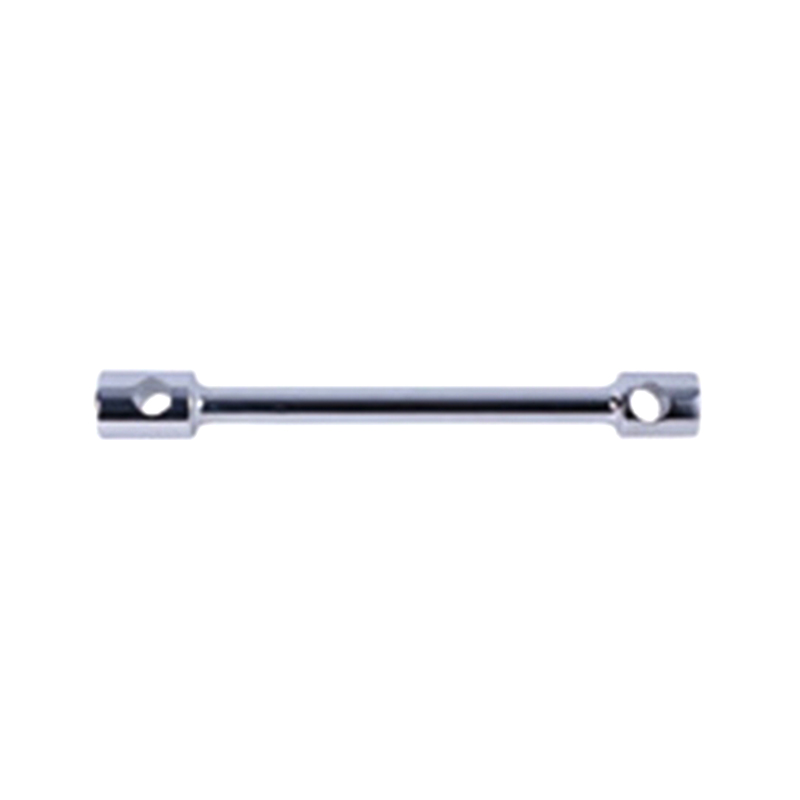
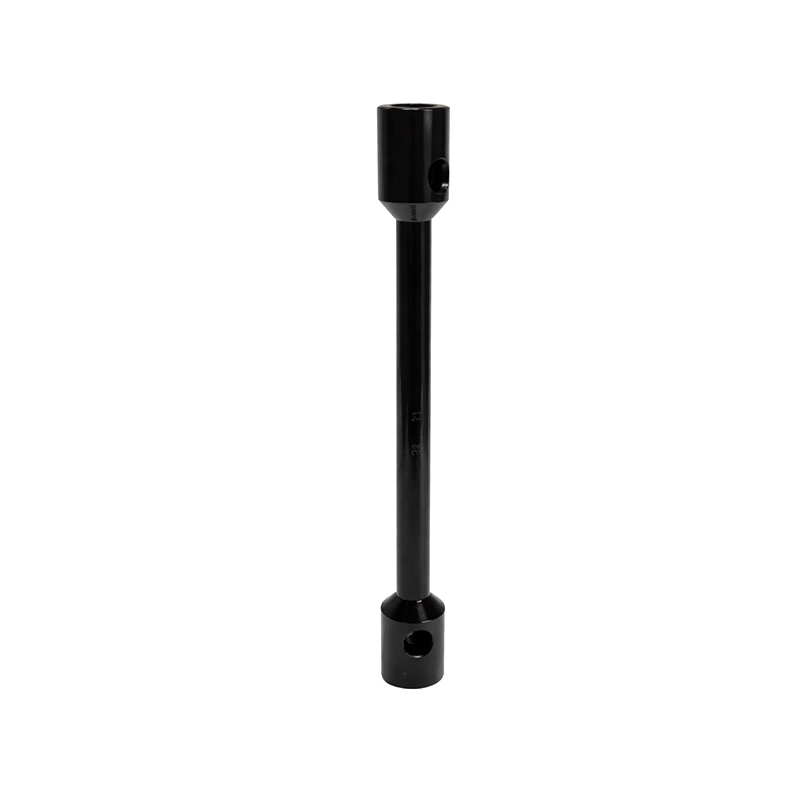
The core engineering logic of a straight handle wheel wrench is straightforward but easily underestimated: by placing two different socket sizes at opposite ends of a single bar, the tool eliminates the need to carry separate wrenches for different vehicle types. In a repair shop that services sedans, light trucks, and vans within the same shift, this means a technician reaches for one tool instead of three — a small change that compounds into meaningful time savings across a full working day.
The socket size pairing is the most consequential specification decision in this design. Effective pairings follow the principle of spanning two adjacent vehicle classes — large enough to avoid redundancy, close enough to stay relevant across a realistic service mix. The most widely stocked combinations in professional repair environments are:
| Socket Pairing |
Primary Vehicle Coverage |
Typical Application Context |
| 17 mm / 19 mm |
Compact to mid-size passenger cars |
Urban repair shops, dealerships |
| 19 mm / 21 mm |
Mid-size sedans to mid-size SUVs |
General automotive workshops |
| 21 mm / 24 mm |
Full-size SUVs to light trucks |
Fleet maintenance, commercial vehicle shops |
| 22 mm / 24 mm |
Vans and light commercial vehicles |
Logistics fleets, delivery van servicing |
Repair shops that stock two or three straight handle wheel wrench pairings across this range can cover virtually every passenger and light commercial vehicle they are likely to encounter — at lower total tool cost and with far less cabinet space than an equivalent socket set. For workshop procurement managers, this vehicle-class-to-pairing mapping is the practical starting point for stock planning.
Handle Length and Torque Output: Sizing a Straight Handle Wheel Wrench to the Job
Unlike a cross shape wrench where both arms contribute simultaneously, a straight handle wheel wrench generates torque through a single-arm lever. The effective torque output is therefore directly proportional to handle length — and getting the handle length right for the target vehicle class is a specification detail that separates tools that work comfortably from those that require excessive physical effort or risk over-torquing smaller fasteners.
The relationship between handle length, applied force, and output torque follows basic lever mechanics: torque (Nm) = applied force (N) × effective lever length (m). For a technician applying 150 N of hand force — a comfortable sustained effort for most adults — the table below shows the torque achievable at different handle lengths:
| Handle Length |
Torque at 150 N Applied Force |
Suitable Lug Nut Spec Range |
Recommended Vehicle Class |
| 300 mm |
~45 Nm |
Up to 80 Nm |
Compact passenger cars only |
| 450 mm |
~68 Nm |
80–120 Nm |
Passenger cars and small SUVs |
| 550 mm |
~83 Nm |
100–150 Nm |
Mid-size SUVs and light trucks |
| 650 mm |
~98 Nm |
130–180 Nm |
Full-size SUVs, vans, light commercial |
For workshop use where body-weight force can be applied to the handle end (pushing down with foot or full arm extension), the achievable torque is substantially higher — but this also increases the risk of over-torquing on smaller fasteners if the same long-handle tool is used on passenger cars. A well-specced repair shop pairs a shorter straight handle wheel wrench for sedan and hatchback work with a longer-handled version for light truck and van service, rather than using one length across all vehicle types.
Bar Stock vs. Forged Construction: Structural Differences That Matter in Daily Workshop Turnover
A straight handle wheel wrench used in a repair shop is cycled far more frequently than an OEM emergency tool stored in a spare wheel well. Daily use across multiple vehicle types exposes the tool to cumulative fatigue loading that makes manufacturing method — bar stock cut-and-machined versus drop-forged — a meaningful factor in service life, not just a quality-tier marketing distinction.
Bar Stock Construction
Bar stock wrenches are machined directly from round or hexagonal steel bar. The process is straightforward and low-tooling-cost: cut to length, machine socket bores at each end, apply surface treatment. The steel grain structure runs uniformly along the bar axis, which is well-oriented for tensile loads along the handle but not optimized for the bending stress that concentrates at the socket-shoulder transition — the point where the full-diameter bar steps down into the socket bore. This transition zone is where fatigue cracks tend to initiate in bar stock tools after extended heavy use.
Forged Construction
Drop-forged wrenches are pressed from a steel blank under high force, causing the grain structure to flow into the final tool shape including through the socket shoulder transition. The result is a denser, more continuous microstructure at the highest-stress point. Forged tools also benefit from work-hardening introduced during the forging process itself, which increases surface strength even before heat treatment. For a straight handle wheel wrench used in a busy repair shop — say, 30–50 tire changes per day across a range of vehicle types — the extended fatigue life of a forged construction is the primary reason professional-grade tools justify their price premium over bar stock alternatives.
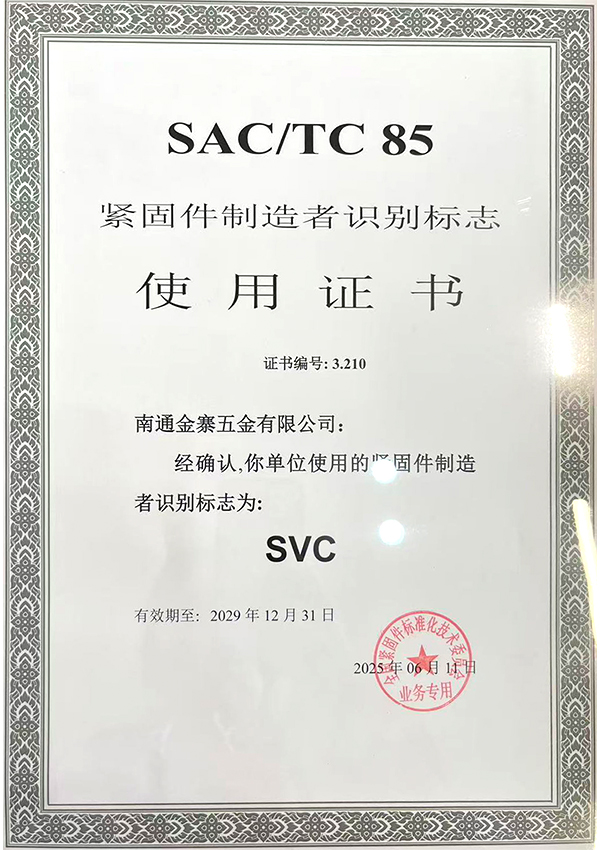
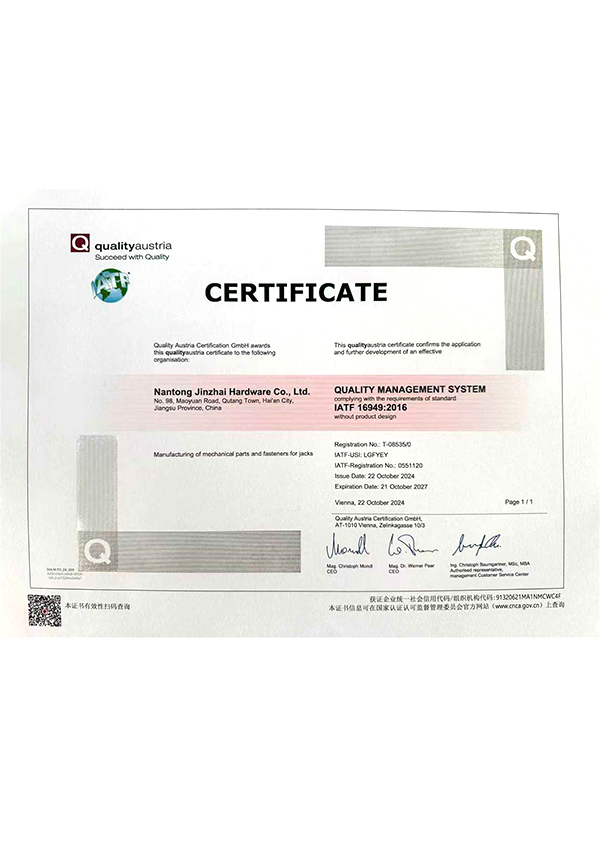
Shanghai Soverchannel Industrial Co., Ltd., through Nantong Jinzhai Hardware Co., Ltd., produces both bar stock and forged configurations depending on customer application requirements, with the full-process inspection system applied equally to both. For workshop-turnover applications where cycle count is high, forged construction with documented heat treatment is the standard recommendation from the company's technical team.
Socket Bore Depth on a Straight Handle Wheel Wrench: Why Shallow Sockets Cause Field Problems
Socket bore depth is among the most overlooked dimensional specifications on a straight handle wheel wrench, yet it directly determines whether the tool can engage the full lug nut height — and whether it can clear the wheel stud that protrudes beyond the nut. Insufficient bore depth causes two distinct failure modes that show up quickly in workshop use.
The first failure mode is incomplete hex engagement. If the socket bore is shallower than the nut's hex height, the socket contacts only the upper portion of the nut faces. Under high breakaway torque — particularly on corroded or over-torqued nuts — this partial engagement concentrates the force on the upper nut corners and dramatically increases the risk of corner rounding. Full hex engagement, where the socket contacts the nut faces across their full height, distributes force evenly and is the only reliable mode for high-torque removal.
The second failure mode is stud interference. On many vehicles — particularly light trucks and vans — the wheel stud extends 5–15 mm beyond the seated lug nut. A socket bore that is not deep enough to accommodate this protrusion will bottom out on the stud before fully seating on the nut. The result is a tool that appears engaged but is actually riding on the stud end, transmitting force through the stud threads rather than the nut hex. Minimum recommended bore depths by common nut size:
- 17–19 mm sockets (passenger car): Minimum 22 mm bore depth to clear standard M12 and M14 stud protrusion on European and Asian platforms.
- 21–22 mm sockets (SUV/MPV): Minimum 26 mm bore depth; SUV studs are typically longer and protrude further beyond the nut seat.
- 24 mm sockets (light truck/van): Minimum 30 mm bore depth; commercial vehicle studs frequently protrude 12–18 mm beyond the nut, particularly on hub-piloted wheel configurations.
When sourcing a straight handle wheel wrench for workshop use across sedans and light trucks — the core application for this tool type — explicitly specifying minimum bore depth per socket end is the single most effective way to avoid both failure modes in the field.
Surface Treatment Selection for Workshop Tools: Balancing Durability, Cost, and Appearance
A straight handle wheel wrench in a repair shop environment faces different surface treatment demands than an OEM emergency tool that sits sealed in a spare wheel well. Workshop tools are handled daily, dropped on concrete floors, exposed to brake dust, cutting fluids, and cleaning solvents, and expected to look presentable on a professional tool wall. The surface treatment choice involves trade-offs across corrosion resistance, abrasion resistance, chemical resistance, and visual appeal that are worth evaluating explicitly.
Blackening (Oxide Finish)
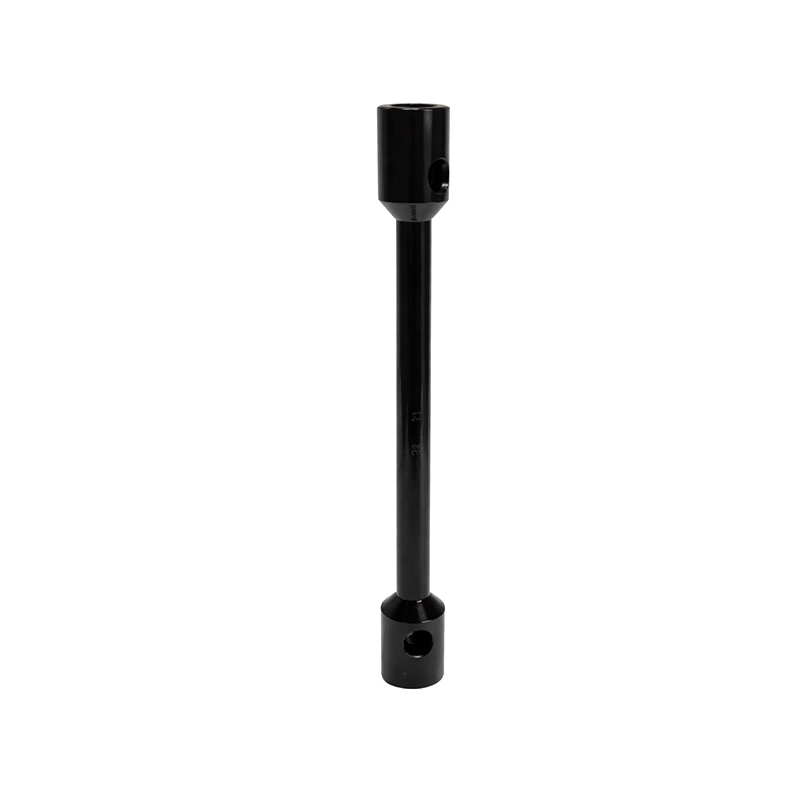
Blackening gives a clean, professional matte-black appearance popular in professional tool markets. The conversion coating is very thin (1–3 µm) and provides minimal standalone corrosion protection — it must be supplemented with an oil or wax finish to remain effective. In a workshop environment where tools are regularly wiped down with solvent-based cleaners, the supplemental oil coating is stripped away quickly, leaving bare steel vulnerable. Blackening is best suited for indoor workshop use in dry climates where the tool is regularly maintained with a light oil application.
Zinc Plating (Electrogalvanizing)
Zinc plating provides active corrosion protection through the sacrificial action of the zinc layer — even when scratched or abraded, the zinc continues to protect the base steel by corroding preferentially. Standard zinc plating with clear or yellow chromate passivation achieves 120–200 hours of salt-spray resistance per ISO 9227. For workshop tools that get dropped and scratched regularly, the self-healing nature of sacrificial zinc protection makes it a more durable long-term choice than a purely barrier coating like blackening.
Electrophoretic Coating (E-coat)
E-coat provides the highest corrosion resistance of the three common options — 480+ hours of salt-spray protection in standard testing — and also penetrates socket bores and recesses that spray-applied coatings miss. The polymer film is chemically resistant to most workshop solvents and brake fluids, which makes it the preferred finish for tools used in environments where chemical exposure is frequent. The trade-off is cost: E-coat requires electrodeposition equipment and process control that adds to unit price. For a professional workshop investing in long-service-life tools, E-coat on a straight handle wheel wrench is a justifiable specification upgrade.
Repair Shop Tool Inventory Logic: When a Straight Handle Wheel Wrench Outperforms a Socket Set
A common question in workshop tool procurement is whether a ratchet-and-socket set makes dedicated lug wrenches redundant. For high-volume tire change operations — the core application of a straight handle wheel wrench in repair shops — the dedicated wrench holds several practical advantages that a socket set does not replicate efficiently.
The key advantages of a straight handle wheel wrench in a turnover repair environment:
- No ratchet mechanism to maintain: Ratchet mechanisms accumulate grit and require periodic cleaning and lubrication to maintain click torque accuracy. A straight bar wrench has no moving parts below the socket bores — nothing to seize, strip, or recalibrate. In a high-throughput shop, this translates directly into lower maintenance cost per tool over its service life.
- Full torque on breakaway: Ratchets are directional load-bearing devices designed for run-down, not breakaway. Applying full breakaway torque on a corroded or over-torqued lug nut through a ratchet risks pawl damage or handle deformation. A solid bar wrench transmits 100% of applied force directly to the socket with no mechanism in the load path.
- Speed on run-down: After breakaway, a straight handle wheel wrench can be spun by rolling the handle between the palms — significantly faster than ratcheting for the 5–8 turns typically needed to fully remove a lug nut. In a shop doing 15–20 tire rotations per day, this speed difference adds up to measurable labor time savings.
- Lower per-unit cost at equivalent quality: A quality straight handle wheel wrench costs a fraction of a calibrated torque wrench or premium ratchet-and-socket combination. Stocking multiples for different size pairings is economically straightforward — a relevant consideration when tools need to be replaced after workshop wear or loss.
- Dedicated use reduces cross-contamination: In a shop where the same socket set is used for engine work, chassis work, and wheel service, sockets that contact oily components can transfer contamination to wheel studs and lug nut seats — a minor but real concern for brake rotor cleanliness. A dedicated wheel wrench stays in the tire bay.
The practical conclusion for most independent repair shops is that a straight handle wheel wrench and a torque wrench are complementary tools — the former for fast breakaway and run-down, the latter for final torque-to-spec confirmation. Using an impact gun for all three functions is common but introduces the separate risk of over-torquing without a calibration check, which is a liability exposure most professional shops prefer to avoid.
Custom Socket Pairings and Non-Standard Configurations: OEM and Fleet Sourcing Beyond Catalog Options
Standard catalog straight handle wheel wrenches cover the most common socket size pairings for general automotive service. But fleet operators, OEM vehicle programs, and specialized repair operations frequently encounter requirements that catalog products do not address — and understanding where customization is both feasible and cost-effective helps procurement teams avoid over-compromising on fit or paying unnecessarily for off-the-shelf options that almost but do not quite meet their specifications.
Common non-standard straight handle wheel wrench requirements that arise in practice:
- Unusual socket pairings: A fleet running imported vehicles with non-standard lug nut sizes (e.g., 18 mm or 20 mm, uncommon in catalog tooling) alongside domestic trucks requires custom socket boring on an otherwise standard bar. This is a straightforward customization that does not require new forging tooling — only a different CNC boring program.
- Custom handle lengths: Vehicle-specific OEM kits sometimes require a handle length dictated by the spare wheel compartment rather than by torque optimization. A 5 mm deviation from a standard catalog length may require a custom production run but is manufacturable within normal process parameters.
- Branded or labeled tools: Fleet operators and roadside assistance programs often require embossed company names, part numbers, or color-coded surface treatments for tool identification and inventory management. These are surface and marking customizations that do not affect structural specification.
- Non-standard cross-section handles: Ergonomic oval or D-section bar profiles are occasionally specified for premium tool programs where grip comfort differentiates the product in a competitive retail environment. These require custom forging or extrusion tooling but are feasible at sufficient volume.
Shanghai Soverchannel Industrial Co., Ltd. specifically excels in this type of non-standard and custom special-shaped component development. The company's integrated R&D, production, and sales structure — with manufacturing executed at Nantong Jinzhai Hardware Co., Ltd. — means that custom straight handle wheel wrench projects move from specification to production sample without the communication gaps that arise when design and manufacturing are separated across different organizations. For OEM customers and fleet procurement teams with non-catalog requirements, the company's established fastener customization process applies directly to wheel wrench development, backed by the same rigorous quality control and full-process inspection system used across all automotive fastener production.