Industry Knowledge
Torque-to-Yield vs. Torque-to-Angle: What the Tightening Specification Actually Tells You About the Bolt
Two tightening methods dominate modern Automotive Bolts specifications for gasketed engine joints, and confusing them is one of the most consequential installation errors in vehicle assembly and repair. Torque-to-yield (TTY) bolts are engineered to be tightened past the elastic limit of the material into a controlled plastic deformation zone. Once stretched beyond yield, the bolt maintains a highly consistent clamping force because the joint load is determined by the material's yield behavior — not by friction variability between the thread flanks and bearing surfaces, which can swing torque readings by 15–25% without changing actual preload. The tightening procedure for TTY bolts always includes a base torque followed by one or more specified rotation angles, such as "25 Nm + 90° + 90°." That angle instruction is the definitive indicator that the bolt is designed for single use — once stretched into the yield zone, the bolt's elastic recovery is insufficient to re-establish correct preload on a second assembly.
Torque-to-angle (TTA) bolts follow the same installation sequence — base torque plus rotation — but are not intentionally stretched to yield. They operate within the elastic range, which means they can typically be reused if undamaged. The primary purpose of the angle step in TTA is the same as in TTY: removing friction as the dominant variable so that clamping force is governed by bolt elongation geometry rather than lubrication state. Both methods are engineered responses to the same problem faced by modern lightweight engines: aluminum cylinder heads expand at different thermal rates than cast iron blocks, and the resulting movement during heat cycles would plastically deform a conventional bolt tightened purely by torque, causing gasket failure over time. Hybrid TTY designs exist that build in a safety margin within the yield zone, allowing a limited number of re-assemblies, but these require explicit manufacturer designation — they cannot be assumed from visual inspection alone.
From a manufacturing perspective, TTY bolt production requires tighter control of material yield strength consistency than conventional fasteners. If the yield point varies between bolts in the same lot, the plastic deformation achieved during installation will also vary — directly affecting clamping force uniformity across a multi-bolt joint like a cylinder head. This is one reason why automotive OEM fastener programs specify not just minimum mechanical properties but also permissible yield strength ranges, placing demands on suppliers that go well beyond standard grade 10.9 or 12.9 certification.
Why Thread Rolling After Heat Treatment Matters for Fatigue Life in Automotive Fasteners
The sequence in which threads are formed relative to heat treatment is a manufacturing decision with measurable consequences for fatigue performance — and it is a decision that separates high-quality Automotive Bolts production from commodity fastener manufacturing. Standard practice threads bolts before heat treatment because the steel is softer and forming is easier and faster. However, threading after heat treatment — specifically, thread rolling after quenching and tempering — produces significantly superior fatigue resistance by inducing compressive residual stresses at the thread roots precisely when the material is at its final hardness.
Thread rolling is a cold-forming process in which hardened steel dies displace material to create the thread profile rather than cutting it away. The continuous grain flow that results from this displacement — following the thread contour unbroken — is fundamentally different from the severed grain structure left by cut threads. Rolled threads are typically 10–20% stronger in static tensile tests and show fatigue strength improvements of 50–75% compared to equivalent cut threads at the same material grade. At the thread root, where stress concentration is highest and fatigue cracks initiate, the compressive layer induced by rolling acts as a direct countermeasure to cyclic tensile stresses generated under dynamic loads. For engine connecting rod bolts, main bearing cap bolts, and wheel hub bolts — applications where fatigue failure is catastrophic and not visually detectable in advance — this manufacturing difference is a safety-relevant engineering parameter, not a production optimization detail.
Cold forging of the bolt head and shank precedes threading in both sequences. Cold heading at room temperature aligns metal grain flow along the bolt geometry, improving tensile strength and dimensional consistency simultaneously. High-speed cold forging machines can produce thousands of bolt blanks per hour with minimal material waste, which is why cold forging is the universal standard for Automotive Bolts mass production. The combination of cold-forged shank, rolled threads, and controlled quench-and-temper heat treatment defines the production chain that generates the mechanical reliability automotive OEMs require at production volumes.
Bolt Head Geometry and Tool Access: Matching Drive Type to Assembly Constraints
Head geometry selection for Automotive Bolts is driven as much by assembly access constraints and production line tooling as by the load requirements of the joint. Modern engine bays, transmission housings, and suspension subframes are densely packaged, and the wrench clearance envelope available at each joint determines which head types are physically installable — particularly when pneumatic or electric torque tools are used at production line speeds.
Hex Head
The baseline for most automotive structural connections. Compatible with standard sockets and box wrenches, widely available in all standard grades and sizes. The 60° engagement angle between drive faces limits the tool swing arc needed for repositioning to 60°, which is sufficient for most accessible joint locations. Drawback: the relatively tall side walls increase the wrench clearance envelope, making hex heads unsuitable in tight cavities.
12-Point (Double Hex) Head
The 12-point head provides 30° between engagement positions — half the rotation needed to re-engage compared to a hex socket — making it substantially faster to re-seat a socket in confined spaces with limited swing arc. The smaller head diameter compared to an equivalent hex size means a smaller socket can reach the bolt in tight access zones. Critically, the 12-point geometry supports higher torque transmission for a given head size because each of the twelve contact surfaces is smaller and distributes load differently than six wider hex faces. This makes 12-point bolts standard in high-clamp-load engine applications — connecting rod bolts and cylinder head bolts where both torque magnitude and access difficulty coincide.
Socket Head (Internal Hex / Allen)
The cylindrical head profile allows installation in counterbored holes for flush-surface assembly — common in brake caliper brackets, engine timing covers, and gearbox housings where protruding heads would conflict with adjacent components or sealing surfaces. The internal hex drive removes the external wrenching envelope entirely, allowing the fastener to sit in recesses inaccessible to any external socket. The limitation is that internal drive surfaces are more susceptible to cam-out under high torque if worn or misaligned, which is why impact driver use on socket head cap screws is generally discouraged in precision automotive assembly.
| Head Type |
Min. Swing Arc |
Head Profile |
Typical Automotive Application |
| Hex |
60° |
External, tallest |
Structural connections, suspension, chassis |
| 12-Point |
30° |
External, compact |
Engine internals, connecting rods, cylinder heads |
| Socket Head |
N/A (inline tool) |
Flush/recessed |
Brake calipers, timing covers, gearboxes |
| Hex Flange |
60° |
External with integrated washer |
Engine brackets, subframes, body panels |
Surface Coating Selection for Automotive Bolts: Balancing Corrosion Resistance, Hydrogen Embrittlement Risk, and Friction Coefficient
Surface treatment selection for Automotive Bolts involves three engineering variables that do not optimize in the same direction: corrosion resistance, hydrogen embrittlement risk, and friction coefficient consistency. Getting this balance wrong has led to documented in-service failures — not from insufficient bolt strength, but from coating-induced embrittlement or torque-to-preload inconsistency caused by uncontrolled surface friction.
Zinc Electroplating
The most economical corrosion protection for grade 8.8 bolts in sheltered or interior applications. Coating thickness of 5–12 µm provides 72–200 hours neutral salt spray (NSS) resistance depending on passivation type. The critical limitation: electroplating introduces hydrogen into the bolt steel as a byproduct of the acid pickling and plating process. For grade 10.9 bolts, hydrogen embrittlement baking at 200°C within 4 hours of plating is mandatory under ISO 4042. For grade 12.9 bolts, electroplating is explicitly discouraged by both ISO 898-1 and most automotive OEM specifications — the tensile strength and hardness levels at grade 12.9 make the material particularly susceptible to hydrogen-induced fracture below proof load, potentially with no visible warning.
Zinc-Nickel Alloy Plating (10–15% Ni)
The automotive underbody and powertrain standard for corrosion-critical joints. Salt spray resistance typically exceeds 1,000–1,200 hours and the coating maintains performance up to approximately 200°C — covering the thermal envelope of most under-hood applications including exhaust manifold studs and turbocharger mounting hardware. Zinc-nickel is electroplated, so hydrogen baking requirements apply to grade 10.9 and above, but the alloy composition produces lower hydrogen absorption than pure zinc plating, and the baking window is more reliably managed in controlled production environments. It is compatible with thread-locking patches (Nylok, Precote) and is the preferred choice for global automotive OEMs specifying corrosion performance across diverse climatic markets.
Zinc-Flake Coatings (Dacromet / Geomet / Magni)
The safest coating option for high-strength bolts at grade 10.9 and 12.9. Applied without electrolytic processes, zinc-flake coatings introduce zero hydrogen into the steel, eliminating embrittlement risk entirely. Coating thickness of 8–15 µm delivers 500–1,000+ hours salt spray resistance, with RoHS and REACH compliance (no hexavalent chromium in modern formulations). The friction coefficient of zinc-flake coatings is tightly controlled and consistent between batches, which significantly improves torque-to-preload repeatability on automated assembly lines. This predictability is why zinc-flake specification is widespread in automotive chassis, suspension, and structural fastener programs where the tightening torque table and expected joint preload must align reliably across millions of production units.
Phosphate and Oil (Black Phosphate)
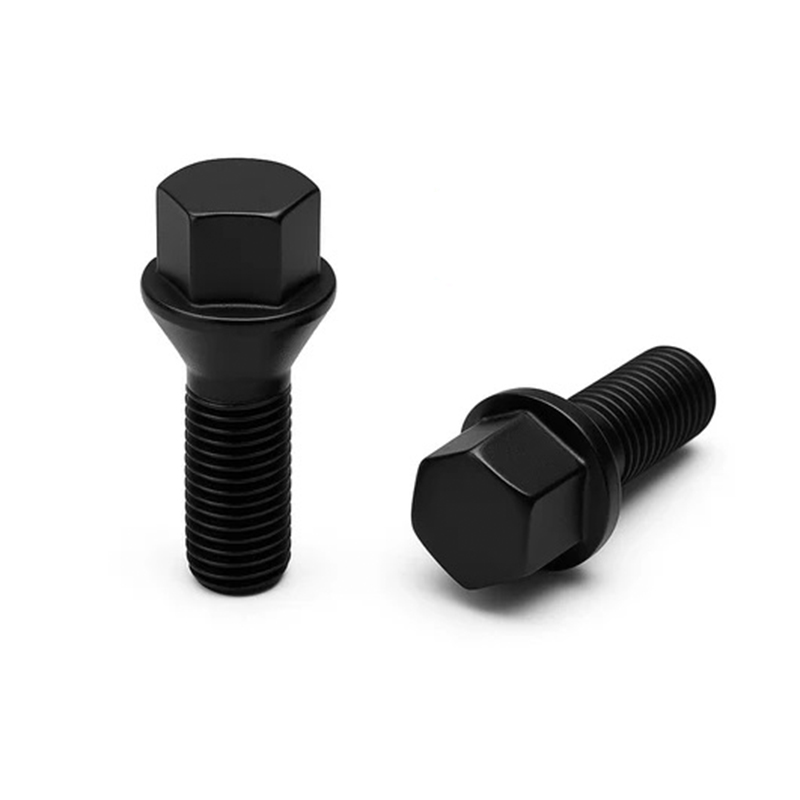
Used primarily for OEM engine and transmission bolts that operate in lubricated or sealed environments. Black phosphate provides minimal standalone corrosion resistance but imparts a controlled, consistent friction surface that is particularly important for in-engine bolts where lubricant contamination of the thread interface is expected and must be accounted for in torque specification. The dark matte finish is also useful for visual identification of bolts that must not be confused with zinc-plated equivalents carrying different torque values.
Non-Standard Automotive Bolt Customization: Where OEM Engineering Demands Exceed Catalog Specifications
The proportion of Automotive Bolts in a modern vehicle that can be sourced directly from a standard catalog is lower than most non-specialists assume. Engine architecture changes, platform-specific packaging constraints, weight reduction programs, and next-generation material combinations in EV powertrain assemblies routinely push fastener requirements outside DIN, ISO, or SAE standard geometry. Custom shank geometries with multiple diameters on a single bolt, non-standard head heights for limited tool clearance, proprietary thread forms for direct-into-aluminum engagement without inserts, and bolts with integrated functional features such as pilot diameters or sealing shoulders are common requirements in automotive OEM sourcing.
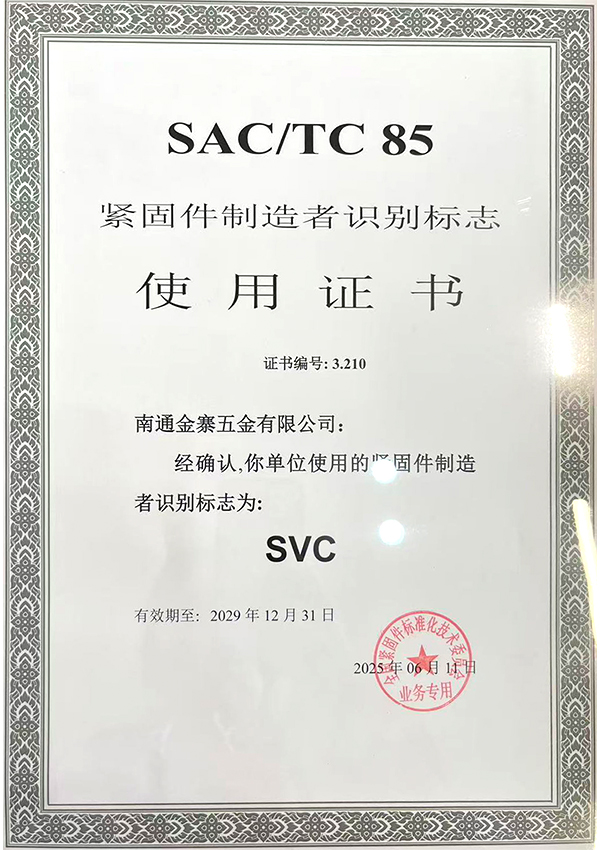
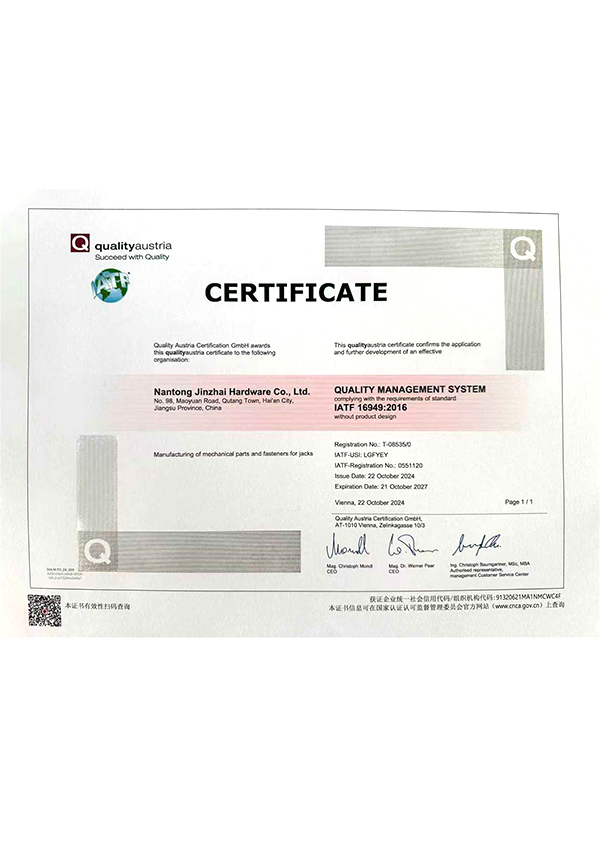
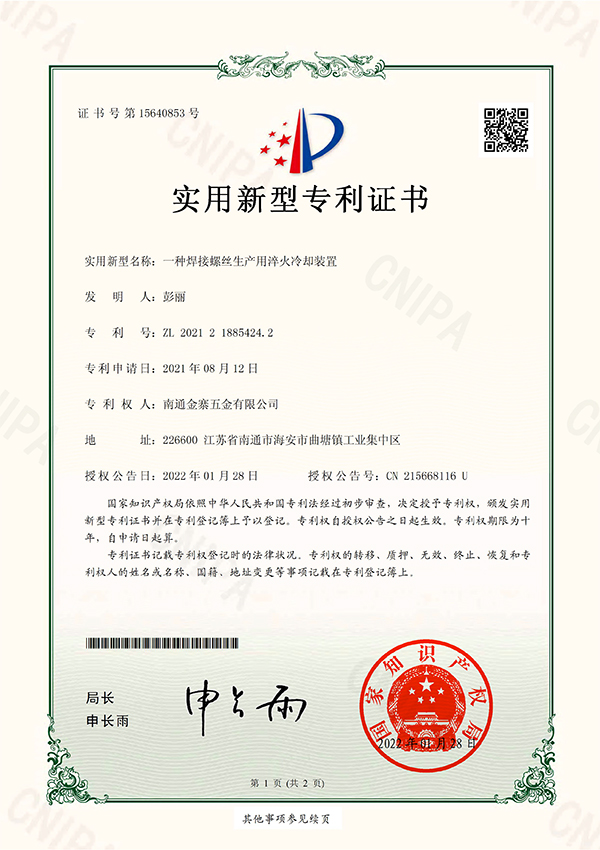
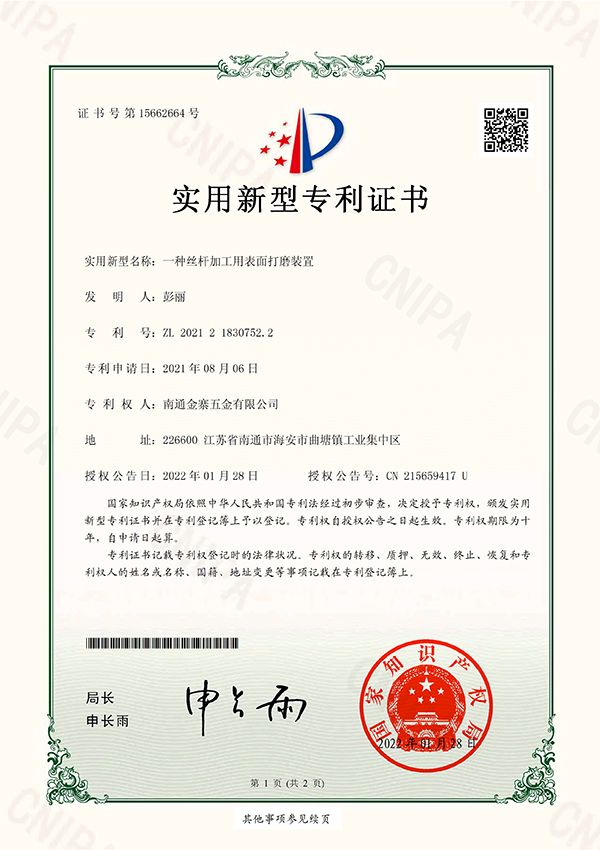
Shanghai Soverchannel Industrial Co., Ltd. is a manufacturer that has built its technical foundation precisely in this space. As a company deeply engaged in the automotive fastener industry for many years, and operating through its production base Nantong Jinzhai Hardware Co., Ltd., Shanghai Soverchannel Industrial Co., Ltd. manages OEM/ODM bolt development programs from initial sample engineering through full production validation — not simply catalog fulfillment. The full-process inspection system that governs its standard bolt production extends to every custom program: first-article inspection reports, dimensional compliance to customer drawing specifications, mechanical property certification against the design grade, and surface treatment verification against OEM corrosion standards.
The product scope extends well beyond bolts alone. Shanghai Soverchannel Industrial Co., Ltd. produces matched nuts, steel processing parts, welding components, and complex special-shaped fastening assemblies — covering the full range of joining hardware that a single automotive sub-system or assembly module may require. For customers managing multiple fastener suppliers for the same platform, consolidating into one technically capable source with consistent quality management reduces validation burden, improves supply chain transparency, and simplifies the traceability documentation required by IATF 16949-governed production environments.
Fastener Failure Modes in Automotive Applications and How Design and Manufacturing Decisions Prevent Them
Most Automotive Bolts failures in service are not caused by insufficient rated strength — they are caused by predictable mechanisms that are addressable through fastener selection, manufacturing process control, and installation procedure. Understanding these failure modes allows engineers and procurement teams to make better decisions at the specification stage rather than diagnosing failures after they occur.
- Fatigue fracture at the thread root: The most common automotive bolt failure mode. Occurs under cyclic loading when stress concentrations at the first engaged thread root exceed the material's endurance limit. Addressed through rolled threads (versus cut), thread-after-heat-treatment sequencing, and correct preload to keep the joint in compression throughout the load cycle.
- Hydrogen embrittlement fracture: Delayed brittle fracture occurring hours or days after installation, caused by hydrogen absorbed during electroplating. Occurs at loads below rated proof load with no visible warning. Prevented by specifying zinc-flake coatings for grade 10.9 and above, or by strict baking protocol compliance when electroplating is unavoidable.
- Vibration loosening (self-loosening): Micro-slip at the thread and bearing face interfaces under transverse vibration causes incremental rotation of the nut or bolt, reducing preload progressively. Prevented by serrated flange designs, thread-locking compounds, or prevailing torque nuts — with the selection depending on the magnitude and frequency of the vibration environment and whether the joint will be disassembled in service.
- Thread stripping in soft mating material: When bolts are driven directly into aluminum or plastic housings, the thread engagement length must be calculated to prevent stripping before the bolt reaches proof load. The rule of thumb for aluminum is a minimum engagement length of 1.5× the bolt diameter for grade 8.8, increasing to 2× for grade 10.9. Below these values, the joint will strip before the bolt reaches design preload regardless of torque applied.
- Stress relaxation at elevated temperature: Grade 12.9 bolts used in high-temperature locations — exhaust system mounting, turbocharger brackets, engine compartment fasteners near heat sources — experience stress relaxation as the material creeps under sustained load above 250–300°C. This reduces preload over time. Solutions include selecting alloy grades rated for elevated temperature service or switching to lower-grade but higher-temperature-capable stainless alloys where the strength margin permits.
Documenting these failure modes against specific joint locations during vehicle development — and matching fastener specifications to each risk — is the engineering discipline that distinguishes automotive-grade fastener programs from general industrial fastener sourcing. The manufacturing rigor behind automotive programs, developed through years of OEM supply chain experience at Shanghai Soverchannel Industrial Co., Ltd., is precisely what makes that discipline executable at production scale.